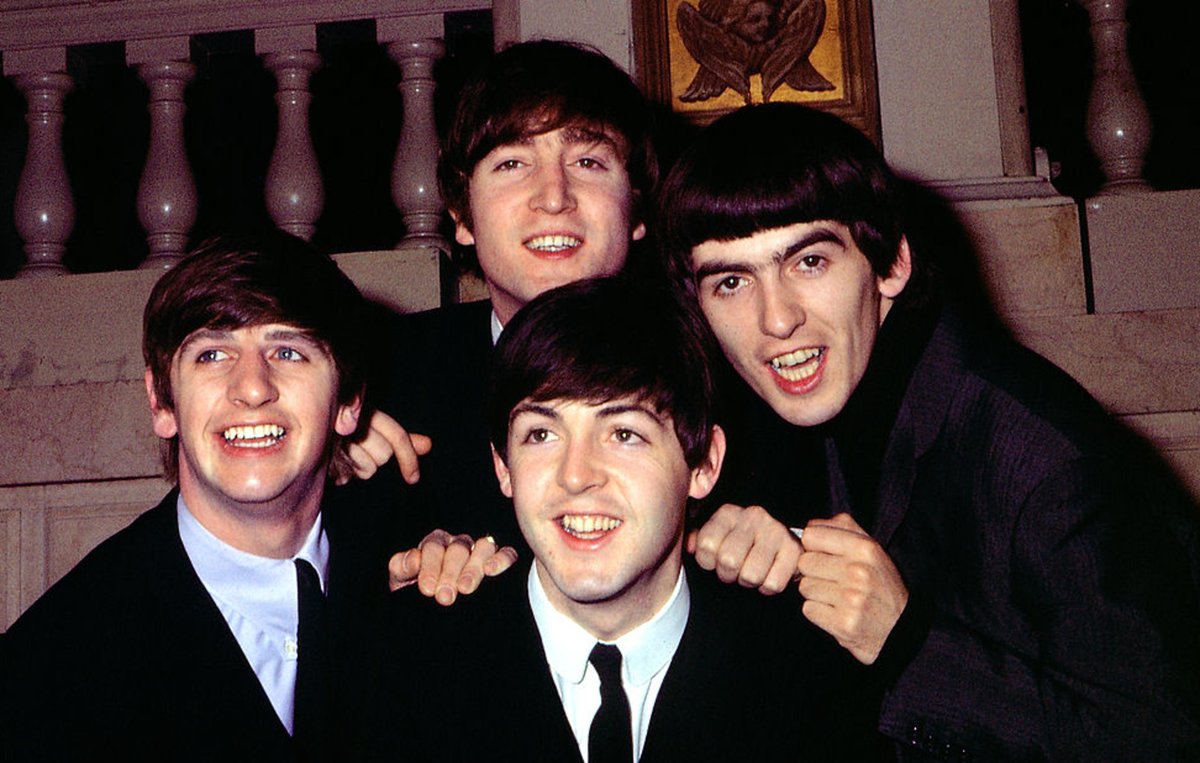
For generations, the names John, Paul, George, and Ringo have conjured images beyond just music. They're etched in our collective memory not only as the architects of modern sound but also as charismatic, often hilarious, figures who danced, sang, and even acted their way across cinema screens. The story of The Beatles as on-screen performers and actors is a fascinating chronicle of accidental stardom colliding with a burgeoning multimedia world, and it's about to be re-examined through an unprecedented lens.
Get ready to experience this saga like never before, as Oscar-winning director Sam Mendes embarks on a monumental project: "The Beatles: A Four-Film Cinematic Event." Scheduled for an April 2028 release, these four interconnected films will each delve into the story from a different Beatle’s perspective. What makes this truly revolutionary? It’s the first time living members Paul McCartney and Ringo Starr, along with The Beatles’ record company, have granted full permission for their story to be told on this scale, signaling a new chapter for their enduring legacy in film.
At a Glance: A New Era for The Beatles on Screen
- Unprecedented Access: For the first time, Paul McCartney, Ringo Starr, and The Beatles’ record company have given full permission for their story to be cinematic.
- Four Films, Four Perspectives: Director Sam Mendes is helming four distinct films, each focusing on a different Beatle, promising a comprehensive, multi-faceted narrative.
- Star-Studded Cast: A new generation of acclaimed actors — Paul Mescal, Harris Dickinson, Barry Keoghan, and Joseph Quinn — will step into the iconic shoes of the Fab Four.
- Beyond the Band: A robust ensemble cast brings key figures like Brian Epstein, Linda McCartney, Yoko Ono, and George Martin to life.
- Deep Dive into On-Screen History: The project offers a fresh look at The Beatles' journey from accidental movie stars in "A Hard Day's Night" to their individual acting ventures.
- 2028 Release: Mark your calendars for April 2028, when this ambitious cinematic event is set to unfold globally.
The Curtain Rises on a New Era: Sam Mendes' Ambitious Vision
Imagine the seismic shift in music, culture, and even fashion that The Beatles instigated. Now, imagine a cinematic event designed to capture that phenomenon in its full, sprawling glory, offering unique insights through the eyes of its four central figures. That's the extraordinary promise of Sam Mendes' "The Beatles: A Four-Film Cinematic Event." This isn't just another biopic; it’s an ambitious, interconnected narrative tapestry woven by a seasoned director, known for his work on "1917" and "American Beauty."
The sheer scale of this project is staggering. Four separate films, each penned by acclaimed writers Jez Butterworth, Peter Straughan, and Jack Thorne, will offer distinct narrative threads while undoubtedly crossing paths, illuminating different facets of the same legendary story. This approach is groundbreaking. Rather than a singular, often reductive, linear narrative, we're promised a mosaic – a nuanced exploration of the individual experiences that collectively forged the most influential band in history. It's a directorial choice that acknowledges the inherent complexity of their story and the distinct personalities that comprised the group.
Crucially, this project carries the imprimatur of the surviving Beatles and their estate. Paul McCartney and Ringo Starr, alongside The Beatles’ record company, have given their blessing, a level of cooperation that has been elusive for previous cinematic attempts to tell their full story. This unprecedented access suggests a depth of authenticity and a wealth of material that will elevate these films beyond mere biography into something truly definitive. Come April 2028, we're not just watching a film; we're witnessing a cultural event designed to redefine how we perceive the Fab Four's journey, especially their public personas and evolving presence as a deeper dive into the history of Beatles biopics will attest.
Stepping into Legends' Shoes: Meet the New Fab Four
The task of portraying icons as beloved and globally recognized as The Beatles is daunting. It requires not just acting prowess but an almost spiritual connection to the essence of these figures. Sam Mendes and his team have assembled a formidable cast, a fresh ensemble tasked with breathing new life into these legends. Their preparation details alone speak volumes about the dedication required for such roles.
First up, Paul Mescal as Paul McCartney. Mescal, whose breakthrough role in "Normal People" captivated audiences, is known for his intense, introspective performances. The detail that he's learning to play guitar left-handed is telling – a commitment to physical authenticity that goes beyond mere resemblance. Even more remarkably, he has already sung with Paul McCartney himself, an experience that must offer unparalleled insight into the man's vocal style and performing energy. This isn't just acting; it's an immersion.
Then there’s Harris Dickinson as John Lennon. Dickinson, recognized for his versatile performances in films like "Triangle of Sadness," faces the challenge of embodying Lennon’s sharp wit, intellectual depth, and often confrontational spirit. His work with a dialogue coach to perfect the Liverpudlian accent is a critical step in capturing the vocal nuance and regional identity that was so central to Lennon's persona. It’s a precise endeavor to ensure that the voice ringing out from the screen truly resonates as John’s.
Barry Keoghan as Ringo Starr brings an intriguing choice to the role of the band’s often-underestimated drummer. Keoghan, an actor celebrated for his unique screen presence and ability to convey vulnerability and intensity, has already met Ringo Starr. This direct interaction is invaluable, allowing him to observe mannerisms firsthand and humanize a character often reduced to comedic relief. Keoghan's approach promises a portrayal that delves into the deeper emotional landscape of the Beatle who anchored the rhythm.
Finally, Joseph Quinn as George Harrison. Quinn, who gained widespread recognition for his role in "Stranger Things," has a personal connection to Liverpool through his mother, which could provide an intrinsic understanding of the cultural backdrop that shaped Harrison. George, often dubbed "the quiet Beatle," possessed a profound spirituality and a dry wit. Quinn's challenge will be to capture that nuanced inner world, showcasing Harrison's evolution from pop star to pioneering solo artist and spiritual seeker.
Each actor faces immense pressure, not only from fans but from the historical weight of their characters. Their meticulous preparation, however, suggests a collective commitment to honoring the legacies of The Beatles, moving beyond imitation to deliver genuine interpretations. This is not just a film about The Beatles; it's a testament to the enduring power of their story, brought to life by a generation of actors ready to embrace the myth and the men behind it.
Beyond the Core: The Ensemble Bringing the Beatles' World to Life
The story of The Beatles isn't solely about the four lads from Liverpool; it's a sprawling epic populated by an unforgettable cast of characters who shaped their destiny, amplified their fame, and sometimes, contributed to their eventual unraveling. Mendes’ ambitious project understands this, assembling an impressive supporting ensemble to fill out the Fab Four's vibrant, tumultuous world. These actors are tasked with portraying figures whose influence was as profound as any musical chord struck by the band.
Consider James Norton as Brian Epstein. Epstein was more than just a manager; he was the visionary who polished The Beatles’ rough edges, packaged their talent, and spearheaded their global phenomenon before his tragic death in 1967. Norton, known for his charismatic yet complex performances, will bring depth to a character often simplified, revealing the genius and the vulnerabilities of the man who arguably created "Beatlemania." Understanding Brian Epstein's pivotal management style is key to grasping The Beatles' early success.
Then there are the women who profoundly impacted their lives:
- Saoirse Ronan as Linda McCartney: Paul's first wife, a talented photographer and musician in her own right, Linda became his rock and creative partner. Ronan, a four-time Oscar nominee, possesses the range to capture Linda's independent spirit and her deep connection with Paul.
- Mia McKenna-Bruce as Maureen Starkey: Ringo's first wife, Maureen was a hairdresser in Liverpool when she met the drummer. McKenna-Bruce will explore their relationship, offering insight into Ringo’s early life and the pressures of sudden fame on his personal world.
- Anna Sawai as Yoko Ono: John Lennon's avant-garde artist wife, Yoko remains one of the most polarizing figures in Beatles history. Sawai, recognized for her powerful performances, will tackle the complex portrayal of Yoko, offering a perspective on her undeniable influence on John's life and art.
- Aimee Lou Wood as Pattie Boyd: George Harrison's first wife, a model, and muse to both George and Eric Clapton, Pattie’s story is intertwined with some of the most iconic songs of the era. Wood's portrayal will likely illuminate the challenges of marriage amidst superstardom.
The behind-the-scenes architects are equally vital: - Harry Lloyd as George Martin: The "Fifth Beatle," Martin was the legendary producer who translated their raw talent into groundbreaking recordings. Lloyd will embody the sophisticated, innovative producer who helped shape their sound.
- Bobby Schofield as Neil Aspinall and Daniel Hoffmann-Gill as Mal Evans: The Beatles’ loyal road managers and personal assistants, Aspinall and Evans were their unwavering support system, often serving as their confidantes and protectors. Their presence underscores the human infrastructure around the band.
- Arthur Darvill as Derek Taylor: The band's publicist, Taylor played a crucial role in managing their image and narrative during their most intense years.
- Adam Pally as Allen Klein: The controversial manager who took over after Epstein’s death, Klein's tenure was marked by financial battles and internal friction. Pally's portrayal will undoubtedly delve into the tumultuous final years of the band.
Finally, the family ties: David Morrissey as Jim McCartney, Paul's father, and Leanne Best as Mimi Smith, John Lennon's aunt and primary guardian. These figures offer glimpses into the foundational years of the Beatles, illustrating the roots from which their extraordinary lives blossomed. This ensemble cast ensures that the Mendes project is not just a story of four men, but a rich, layered portrait of an entire era, seen through the eyes of those closest to the whirlwind.
The Beatles' Original On-Screen Legacy: From Playful Moptops to Psychedelic Explorers
Before this new ensemble takes the stage, it's essential to revisit the original journey of The Beatles as on-screen performers and actors. Their cinematic output, while relatively small, is a crucial part of their legend, documenting their evolution from charming, witty pop stars to introspective, experimental artists. Their initial foray into film was almost accidental, a byproduct of their overwhelming popularity, but it quickly established a unique visual persona that was as vital as their music.
Their first feature film, 1964's A Hard Day's Night, is a masterclass in controlled chaos. Directed by Richard Lester, it captured the frenzy of Beatlemania with a semi-documentary, semi-comedic style. Here, The Beatles weren't so much "acting" in a traditional sense as playing exaggerated versions of themselves. Their natural charisma, rapid-fire Liverpudlian wit, and effortless camaraderie shone through. Paul was the charming one, John the sardonic intellectual, George the quiet observer, and Ringo the lovable, often melancholic, heart of the group. This film established their screen personas, making them relatable and aspirational simultaneously. The New York Times famously called John Lennon a "born actor" for his performance, recognizing his innate screen presence.
Help!, released in 1965, continued with Lester at the helm, moving into a more elaborate, almost Bond-esque spy comedy. While still leveraging their comedic talents, the film saw them lean more into deliberate acting, albeit with mixed results. The charm was still there, but the plot, involving a cult and human sacrifices, often felt secondary to the band's playful antics. Both A Hard Day's Night and Help! highlighted their incredible chemistry and their ability to command the screen simply by being themselves, even if their individual acting chops were still developing. For a deeper dive into their cinematic output, Explore films by The Beatles.
As the 1960s progressed, their films became more experimental, reflecting their evolving musical and artistic sensibilities. Magical Mystery Tour (1967), a made-for-television film, was a psychedelic, surreal, and often incomprehensible journey, conceived and largely directed by the band themselves. It was a critical flop upon release but has since gained cult status, showcasing their fearless, if sometimes unwieldy, artistic ambition. As performers, they were less concerned with narrative and more with creating an experience, embodying the counterculture spirit.
Yellow Submarine (1968) was an animated masterpiece, where the band's voices were used, but their animated counterparts were the stars. It perfectly captured the whimsy and vibrant imagery of their psychedelic period. Finally, Let It Be (1970) served as a poignant, raw documentary of their final recording sessions, unintentionally becoming a cinematic chronicling of their breakup. Here, their performances were intensely real, capturing the tension, the occasional moments of joy, and the undeniable creative genius even as the band fractured. As on-screen performers, they delivered their most honest, unvarnished portrayals, simply being themselves as their legendary journey concluded.
While none of The Beatles would ever be mistaken for classically trained method actors, their on-screen presence was undeniably powerful. They demonstrated an innate ability to connect with audiences, to convey emotion, and to infuse their roles – however limited – with their unique personalities. Their films weren't just promotional vehicles; they were extensions of their artistic vision, shaping how the world saw and remembered them.
Beyond The Beatles: Solo Ventures into Acting
After the curtain fell on The Beatles as a unified musical force, their individual paths diverged, including their exploration of acting careers. While music remained their primary domain, each Beatle ventured into film and television to varying degrees, with mixed results. This era showcased their individual personalities freed from the collective dynamic, allowing them to pursue personal creative interests.
John Lennon had the most critically noted solo acting turn with 1967's How I Won the War, a black comedy directed by Richard Lester (who also directed A Hard Day's Night and Help!). Lennon played Private Gripweed, an absurdist soldier in World War II. It was a more serious acting endeavor than his Beatle films, and while the film itself received mixed reviews, Lennon's performance was often praised for its naturalism and understated quality. It revealed a genuine talent for dramatic acting that, unfortunately, he didn't pursue extensively afterward, choosing to focus on his music and activism.
Paul McCartney, despite his enormous charisma and stage presence, largely shied away from lead acting roles in feature films. He preferred cameos (like in Give My Regards to Broad Street, which he also wrote and scored) or documentary appearances. Paul's on-screen persona remained that of a musician and performer, comfortable in front of a camera as himself, but rarely adopting fictional characters for extended periods.
George Harrison, while perhaps best known for his influential work as a film producer through HandMade Films (Life of Brian, Time Bandits), also had a few acting appearances. He often gravitated towards quirky, smaller roles or cameos, such as in Shanghai Surprise (which he produced and Madonna starred in). His on-screen presence was typically understated, reflecting his often-private nature, and his true passion lay more in the craft of filmmaking behind the scenes. For a closer look at the solo careers of the Fab Four, it's clear their acting pursuits were varied.
It was Ringo Starr who proved to be the most prolific actor among the Fab Four. His natural comedic timing and laid-back charm, so evident in the Beatles' early films, translated well into a variety of roles. He appeared in films like Candy (1968), a psychedelic satire, and The Magic Christian (1969), where he co-starred with Peter Sellers. His most notable lead role was in Caveman (1981), a silent comedy, showcasing his physical comedy skills. Ringo embraced acting with an enthusiasm that his bandmates didn't always share, developing a distinctive on-screen persona that was warm, unassuming, and often surprisingly effective. His filmography, though often in B-movies, demonstrates a genuine comfort and enjoyment in the acting process.
These solo forays highlight the differing personal inclinations of each Beatle. While their collective on-screen presence as The Beatles was an unstoppable force, their individual acting careers offered a glimpse into their distinct artistic curiosities, with Ringo arguably finding the most consistent joy and success in the acting world.
The Challenge of Re-Enacting Icons: Why This Project Matters Now
The decision to embark on "The Beatles: A Four-Film Cinematic Event" in 2028 is not merely an exercise in nostalgia; it's a testament to the enduring, almost mythical, power of The Beatles. Re-enacting icons of this magnitude presents a unique set of challenges and opportunities that make this project particularly compelling in the current cultural landscape.
The biggest hurdle for any actor portraying a Beatle is avoiding mere mimicry. These figures are so deeply ingrained in our collective consciousness – their voices, mannerisms, and even their walk – that a performance that simply imitates risks feeling hollow or like a parody. This is where the early insights into the new cast's preparation become vital. Paul Mescal learning to play guitar left-handed for Paul McCartney isn't just a technical detail; it's an embodied commitment to understanding the physical language of the character. Barry Keoghan meeting Ringo Starr to observe his mannerisms points to a quest for authenticity that goes beyond surface-level impersonation, aiming to capture the essence of the human being rather than just the public image.
Sam Mendes, known for his meticulous direction and ability to draw nuanced performances, is a critical element here. His vision, coupled with the detailed scripts from Jez Butterworth, Peter Straughan, and Jack Thorne, promises to delve deeper than previous biopics. Films like Backbeat (focused on John Lennon's early life and Stuart Sutcliffe) or Nowhere Boy (another look at young John) offered snapshots, but none have had the scope or the unprecedented access that Mendes's project boasts. This isn't just about telling a story; it's about telling the story from multiple, authorized angles, offering a richness and perspective that's never been possible.
In an era saturated with biopics, what makes The Beatles story resonate so powerfully? It's their cultural weight. They didn't just write songs; they soundtracked a revolution, challenged norms, and defined an entire generation. Telling their story now, with the benefit of hindsight and a new generation of talent, allows for a re-evaluation of their impact, their struggles, and their triumphs through a modern lens. The promise of exploring each Beatle's perspective means that viewers won't just witness events; they'll experience the often-conflicting emotions, motivations, and realities that shaped four young men who changed the world. This project isn't just for lifelong fans; it's for anyone seeking to understand the enduring phenomenon of The Beatles, and how their music and personas continue to define the enduring impact of The Beatles' music.
Common Questions About The Beatles' On-Screen Presence
The Beatles' journey into film has always sparked curiosity and debate. Here are some common questions people have about their roles as on-screen performers and actors, providing clarity on their unique cinematic legacy.
Were The Beatles "good" actors in their films?
This is a nuanced question. In their early films like A Hard Day's Night, they weren't "acting" in a traditional sense so much as brilliantly performing exaggerated versions of themselves. Their natural charisma, wit, and authentic chemistry were their greatest assets. They weren't classically trained, but they had an undeniable screen presence and comedic timing that made them compelling to watch. Ringo Starr, in particular, often received praise for his naturalistic performances and later went on to have the most prolific acting career among them. John Lennon also showed surprising dramatic depth in How I Won the War. So, while not all-round "good" actors in the traditional sense, they were exceptionally effective on-screen performers who leveraged their unique personalities.
Why did The Beatles make so many films, especially early in their career?
Their early film ventures, particularly A Hard Day's Night and Help!, were partly contractual obligations and partly a brilliant promotional strategy. As their fame exploded, films became another powerful medium to reach their ever-growing audience. They also enjoyed the creative outlet, even if it was sometimes chaotic. Later films like Magical Mystery Tour were driven by their own artistic experimentation and desire to push boundaries, even if they didn't always achieve critical success.
What makes their filmography unique compared to other bands?
The Beatles' filmography is unique because it mirrors their musical evolution. A Hard Day's Night felt almost like a documentary of Beatlemania, raw and immediate. Help! was a more polished, albeit whimsical, narrative. Magical Mystery Tour was avant-garde and experimental, reflecting their psychedelic phase. Let It Be was an unvarnished look at a band unraveling. Their films weren't just musical showcases; they captured different eras of their creative and personal lives, evolving with them. This unique blend of music, narrative, documentary, and experimental art distinguishes their cinematic output.
How important was their visual presence to their global success?
Crucially important. The Beatles were pioneers of multimedia stardom. Their distinctive hairstyles, fashion, and on-screen antics were integral to their global appeal, particularly during the rise of television. Their films, televised performances, and even press conferences presented a cohesive, captivating image that resonated worldwide, turning them into cultural icons whose influence extended far beyond their music. Their visual appeal helped solidify their brand and made them instantly recognizable figures across the globe, contributing significantly to their unprecedented reach. Sam Mendes's signature directorial style will undoubtedly aim to capture this visual dynamism.
The Road Ahead: What to Expect from the Ultimate Beatles Cinematic Journey
As April 2028 looms on the horizon, the anticipation for Sam Mendes' "The Beatles: A Four-Film Cinematic Event" continues to build. This isn't just a collection of films; it's a meticulously crafted narrative that promises to offer an unparalleled deep dive into the lives and legacy of the Fab Four. So, what can we realistically expect from this ultimate Beatles cinematic journey?
Firstly, prepare for unprecedented narrative depth. With four films, each centered on a different Beatle, we’re likely to witness familiar events from startlingly fresh angles. Imagine seeing the creation of a classic album through John's eyes, then understanding the struggles of fame from Ringo's perspective, the spiritual quest through George's lens, and the emotional anchor from Paul's viewpoint. This multi-perspective approach has the potential to reveal the intricate, often conflicting, dynamics within the band in a way no single film ever could. The collaborative yet distinct narratives will allow for a profound exploration of their individual journeys as well as their collective impact.
Secondly, expect a rich tapestry of character development. The chosen actors are known for their nuanced performances, and the commitment they're showing to their roles (Mescal's left-handed guitar, Keoghan's observation of Ringo) suggests a focus on the human element behind the legends. These films are poised to explore the lesser-known aspects of their lives – their vulnerabilities, their personal struggles, their relationships, and the immense pressure they faced. This ensemble cast, including Saoirse Ronan as Linda McCartney and Anna Sawai as Yoko Ono, indicates a commitment to fully flesh out the personal worlds that shaped each Beatle.
Finally, anticipate a definitive cinematic statement. With the full backing of Paul, Ringo, and The Beatles’ record company, the access to their story, music, and archives will be unparalleled. This isn't just a dramatization; it's an authorized narrative, which, while still a creative interpretation, will carry a weight of authenticity that previous projects could only aspire to. The films are set to be a comprehensive historical and emotional account, cementing The Beatles' place in cinematic history as much as they are in musical legend. Get ready for a profound and illuminating journey that promises to reshape our understanding of the band that changed the world. This is not just a film event, it’s a cultural re-evaluation of the most impactful band of all time, and it will give fans new and old a fresh lens through which to appreciate The Beatles' enduring legacy revisited.
Preparing for the Ultimate Beatles Cinematic Journey
The announcement of Sam Mendes' "The Beatles: A Four-Film Cinematic Event" isn't just news; it's a call to revisit and reconsider the unparalleled legacy of The Beatles. As we prepare for April 2028, this is an invitation to deepen your appreciation for their journey, not just as musical innovators but as enduring on-screen performers and actors.
To truly savor this upcoming cinematic experience, consider taking a journey through their original filmography. Re-watch A Hard Day's Night to marvel at their spontaneous charisma, revisit Help! for its quirky humor, or delve into Let It Be for a raw glimpse into their final moments as a band. Explore their solo ventures too: Ringo’s comedic turns, John’s dramatic role, and George’s production efforts. This re-engagement will provide invaluable context, allowing you to appreciate the nuanced interpretations that Paul Mescal, Harris Dickinson, Barry Keoghan, and Joseph Quinn will bring to their roles.
Beyond the films, immerse yourself in their music, read biographies, and explore documentaries. Understanding the historical context, the cultural impact, and the individual personalities will enhance your viewing experience exponentially. This ambitious project promises to be more than just entertainment; it's poised to be a comprehensive historical and emotional account, offering fresh insights into four men who defined an era. So, get ready to lose yourself in the saga, preparing for what promises to be the ultimate cinematic exploration of The Beatles.