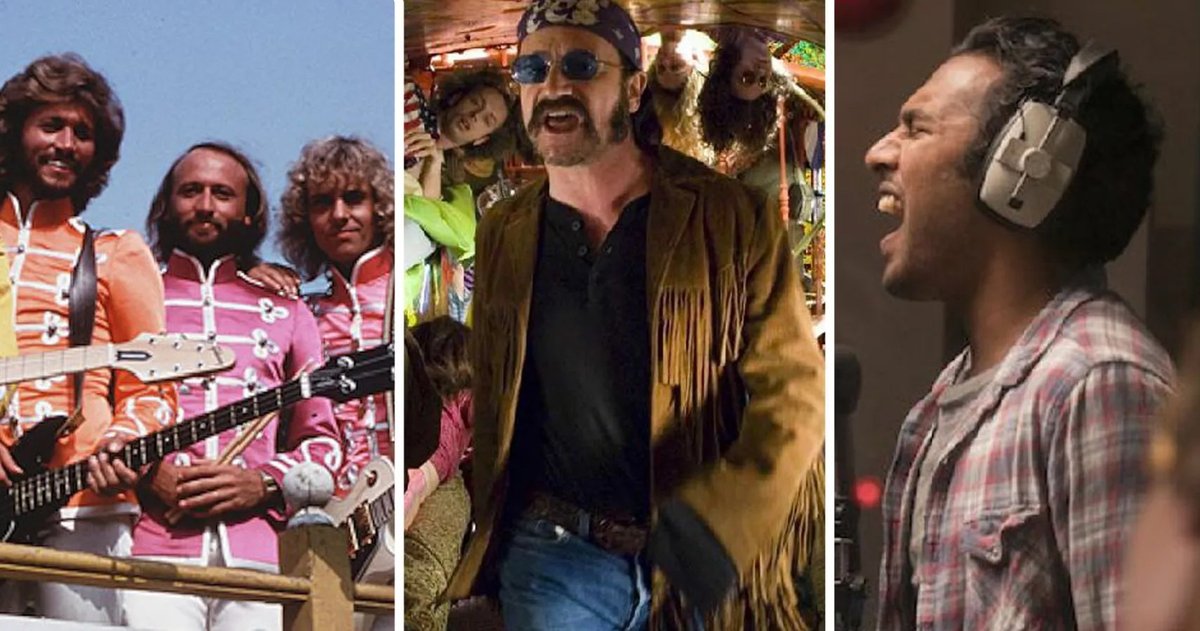
The Beatles didn't just write songs; they wrote history. And in doing so, they rewrote the rules for how music intertwined with media, forever shaping the Critical Reception and Cultural Legacy of The Beatles' Films. Their cinematic ventures, far from mere promotional vehicles, became pivotal artifacts, capturing the vibrant spirit of the 1960s, redefining popular culture, and influencing generations of artists. These films weren't just seen; they were experienced, debated, and assimilated into the very fabric of global youth culture, leaving an indelible mark that continues to resonate today.
At a glance: Why The Beatles' Films Matter
- A Hard Day's Night defined a genre: It set the gold standard for blending music, narrative, and documentary-style realism, launching the modern music video concept.
- A cultural mirror: Their films, especially A Hard Day's Night, perfectly captured the rebellious, spontaneous energy and social shifts of the mid-1960s.
- Innovative filmmaking: Director Richard Lester's techniques became a blueprint for capturing music and performance on screen, valuing raw energy over polished perfection.
- Musical brilliance on display: The films showcased The Beatles' evolving songwriting, groundbreaking production, and inimitable charisma.
- Varied cinematic journey: From the joyous chaos of A Hard Day's Night to the artistic experimentation of Magical Mystery Tour and the poignant honesty of Let It Be, their filmography mirrored their musical evolution.
- Lasting influence: They inspired countless musicians, filmmakers, and artists, elevating rock music to a legitimate art form and cementing The Beatles' status as unparalleled cultural icons.
The World on the Brink of Beatlemania: Setting the Stage for Cinematic Gold
Imagine a world simmering with post-war conservatism, then suddenly ignited by a flash of mop-top hair and an electric guitar riff. This was the landscape when The Beatles emerged. Formed in Liverpool in 1960 by John Lennon, Paul McCartney, George Harrison, and Ringo Starr, their initial sound was a vibrant stew of influences – the raw energy of Chuck Berry and Elvis Presley, the burgeoning British Invasion's pop sensibilities, the storytelling of folk, the exoticism of Indian classical music, and the soulful groove of Motown. They synthesized these diverse elements into something wholly unique, something that spoke directly to a generation yearning for change.
Their breakthrough hit, "Please Please Me," in 1963, didn't just top the charts; it uncorked a global phenomenon known as "Beatlemania." By 1964, the world was in the grip of unprecedented fan adoration, marked by their iconic appearance on The Ed Sullivan Show in February. This wasn't just music; it was a cultural tidal wave.
The 1960s themselves were a crucible of profound cultural shifts. Civil rights movements gained momentum, anti-war sentiments grew, and the counterculture revolution began to question established norms. The Beatles, with their themes of love, peace, and nonconformity (later encapsulated by "All You Need Is Love"), became accidental, yet willing, participants in this societal evolution. Their very presence symbolized a break from tradition, offering a fresh, youthful voice that resonated deeply with a generation rejecting conservative values. It was into this fertile ground of unparalleled popularity and societal change that their first feature film was born, not merely as entertainment, but as a critical, insightful, and highly successful mirror of its time.
The Unveiling of a Phenomenon: A Hard Day's Night
Released in July 1964, A Hard Day's Night wasn't just a movie; it was a cultural event that amplified The Beatles' appeal and solidified their artistic credibility beyond music. It depicted a fictionalized, chaotic 36 hours in the band's life, showcasing their irrepressible charisma, genuine relationships, and quick-witted humor. It wasn't just a commercial triumph, becoming the top-grossing film in Britain that year; it was a critical revelation.
Instant Critical & Commercial Acclaim: A New Benchmark for Art and Commerce
Critics lauded A Hard Day's Night with an enthusiasm usually reserved for more "serious" cinema. Reviewers from The New York Times to smaller publications recognized it as both a commercially viable blockbuster and a genuine contribution to cinematic art. They praised director Richard Lester's dynamic direction, the film's creative storytelling, its sharp, irreverent humor, and, of course, The Beatles' catchy melodies and innovative sound.
Many noted its groundbreaking blend of documentary-style realism and carefully scripted comedy, a novel approach that gave audiences an unprecedented, seemingly authentic glimpse into the lives of their idols. The relatable lyrical themes—youthful trials, romantic pursuits, and the pressures of newfound fame—further endeared the film to a global audience. This overwhelmingly positive critical reception cemented The Beatles' status, not just as pop stars, but as legitimate cultural icons capable of transcending musical boundaries.
Filming the Frenzy: Richard Lester's Innovative Eye
A significant part of A Hard Day's Night's enduring legacy lies in Richard Lester's visionary direction. Lester employed a style that felt radical for its time, utilizing handheld cameras, quick cuts, jump cuts, and a vérité approach that captured the frenetic pace of the band's life. This wasn't the staid, polished cinematography typical of musical films; it was raw, energetic, and spontaneous, mirroring the youthful rebellion of the decade.
Lester's techniques masterfully highlighted each Beatle's individual personality: John's sharp wit, Paul's boyish charm, George's quiet coolness, and Ringo's lovable melancholia. More than just character studies, these stylistic choices are widely cited as a direct precursor to the modern music video. The film demonstrated how music could not only drive narrative but also be seamlessly integrated into a visual language, influencing countless future musical films and artists. It taught filmmakers how to imbue a performance with cinematic energy, turning song sequences into dynamic storytelling moments rather than mere interludes.
More Than a Soundtrack: Musical Mastery & Innovation
The album accompanying A Hard Day's Night was equally revolutionary. Musically, it showcased a band at the peak of their early powers, blending traditional pop forms with innovative twists, complex melodies, and distinctive harmonies. This was a significant step in their artistic evolution, demonstrating a growing sophistication that would soon lead to even more experimental works.
Crucial to this musical leap was producer George Martin, often dubbed "the Fifth Beatle." Martin played a pivotal role in developing innovative sound techniques for the album, including intricate vocal harmonies, multi-track layering, experimental tape effects, and the prominent use of the 12-string guitar. This sonic landscape wasn't just catchy; it paved the way for future advancements in music production, influencing how subsequent generations of artists and producers approached recording.
The album's lyrical themes ventured beyond simple teen romance, exploring the trials of youth, romantic pursuits (e.g., "I’ll Cry Instead"), and subtly commenting on the intense pressures of their newfound global fame (most notably in the title track). Iconic tracks like the title song, co-written by John Lennon and Paul McCartney, are characterized by an upbeat tempo, a catchy melody, and a distinctive, unconventional opening guitar riff. Its lyrics poignantly convey exhaustion alongside the joy of reconnecting with loved ones. Other staples like "I Should Have Known Better," featuring a memorable harmonica riff, and "Can't Buy Me Love," emphasizing love over material wealth, further cemented the album's universal appeal and influence.
A Mirror to the Moment: Capturing the 1960s Zeitgeist
A Hard Day's Night wasn't just a film about The Beatles; it was a film about the 1960s. Its humor, spontaneity, and raw energy perfectly mirrored the youthful rebellion sweeping across the Western world. The band's image – particularly their iconic 'mop-top' hairstyles – became a symbol of a generation breaking free from traditional norms, influencing fashion, youth culture, and social attitudes far beyond music.
The film offered a playful yet incisive look at celebrity, media manipulation, and the demands of fame, all through the lens of four charming, relatable young men. It resonated deeply with a generation that felt misunderstood by older authority figures, providing a cultural touchstone that validated their feelings of nonconformity and desire for change. The film became an accidental anthropological study, offering future generations an authentic, albeit fictionalized, glimpse into the heart of a transformative decade.
Beyond the Hard Day's Night: The Diverse Cinematic Landscape
While A Hard Day's Night remains the gold standard, The Beatles' cinematic journey didn't end there. Their subsequent films showcased a band constantly evolving, experimenting with genre, narrative, and visual styles, though with varying degrees of critical success.
The Psychedelic Whimsy of Help! (1965)
Following the triumphant formula of A Hard Day's Night, director Richard Lester reunited with The Beatles for Help!. This time, the band was thrust into a broader, more fantastical plot: a parody of spy films with an absurd narrative involving a mystical cult and Ringo's cursed ring. While it brought more vibrant color and exotic locations, its critical reception was more mixed. Some critics found its plot too thin or its humor less spontaneous than its predecessor, yet many still praised Lester's visual flair and, of course, The Beatles' undeniable charm and the brilliant accompanying soundtrack. The film cemented their global star power, but also hinted at the internal shifts occurring within the band, moving towards more complex, studio-based musical compositions.
The Controversial Experiment: Magical Mystery Tour (1967)
Perhaps their most challenging film for audiences and critics alike, Magical Mystery Tour was a self-directed, largely unscripted psychedelic odyssey originally broadcast as a BBC television special. Released during their highly experimental phase (post-Sgt. Pepper), it embraced surrealism, non-linear storytelling, and a stream-of-consciousness approach. Its initial reception was overwhelmingly negative, with many critics baffled by its abstract nature and perceived self-indulgence. British newspapers lambasted it, and it was widely considered a failure.
However, its legacy has evolved. In retrospect, many now view Magical Mystery Tour as a bold, if flawed, piece of avant-garde filmmaking, a genuine reflection of the counterculture's embrace of the surreal. It's lauded for its groundbreaking music sequences and its daring to push boundaries, paving the way for future music video experimentation, even if its narrative coherence remained elusive.
The Animated Masterpiece: Yellow Submarine (1968)
In stark contrast to Magical Mystery Tour's initial critical panning, Yellow Submarine received near-universal acclaim. This vibrant, psychedelic animated film took audiences to Pepperland, a utopian paradise under attack by the music-hating Blue Meanies, with The Beatles as its unlikely saviors. Despite the band's minimal direct involvement in the animation (they appeared briefly in a live-action epilogue and contributed new songs), the film was praised for its innovative artistic style, clever wordplay, and powerful message of peace and love.
Critics adored its unique visual aesthetic, which blended various animation techniques and pop art influences, making it a landmark in animation history. It demonstrated the enduring power of The Beatles' music and imagery, even when they weren't physically on screen, and reinforced their iconic status in popular culture. Its influence on animation and design remains profound.
The Unraveling: Let It Be (1970)
Released shortly after their breakup, Let It Be stands as a poignant, often somber, documentary of the band's final rehearsals and recording sessions for the album of the same name. Directed by Michael Lindsay-Hogg, it offered an unvarnished, often uncomfortable, look at the creative process and the mounting tensions within the group.
Initially, critics and fans found it a melancholic viewing experience, a stark contrast to the joyous anarchy of A Hard Day's Night. It captured candid moments of friction, arguments, and glimpses of their undeniable genius. Over the years, Let It Be has undergone a significant critical reappraisal. It's now celebrated for its raw honesty, its historical significance as a document of a band at its breaking point, and its intimate portrayal of musical creation. It’s seen less as a sad farewell and more as a crucial, bittersweet insight into the mechanics of one of the greatest bands in history.
You can learn more about their entire cinematic output, exploring each film's unique place in their story by checking out films by The Beatles.
Echoes Across Generations: The Enduring Cultural Legacy
The Beatles' films did more than entertain; they fundamentally altered the landscape of popular culture, influencing everything from how we consume music to the visual language of storytelling. Their cultural legacy, meticulously forged through critical reception and popular embrace, continues to echo across generations.
Shaping the Visual Language of Music
A Hard Day's Night didn't just predate the music video; it essentially invented its foundational grammar. Richard Lester's rapid cuts, spontaneous energy, and seamless integration of music into visual narrative provided a blueprint that would be refined and adopted by subsequent generations. This film demonstrated that a "film-clip" could be a powerful promotional tool, an art form in itself, and a crucial component of an artist's identity.
This innovation directly paved the way for the rise of MTV and the music video as a dominant cultural force. Artists like David Bowie and Prince, who famously pushed the boundaries of visual presentation, directly benefited from and built upon the precedents set by The Beatles' cinematic experiments. Their films elevated rock music from a mere auditory experience to a legitimate art form that commanded visual attention, influencing not only subsequent musical films but also advertising, television, and narrative filmmaking.
Inspiring Artistic Generations
The impact of The Beatles' films on other artists is immeasurable. They didn't just influence other musicians; they defined what it meant to be a popular band with artistic integrity in the cinematic space.
- Setting the precedent for musical films: A Hard Day's Night established a benchmark for how to portray musicians on screen—authentically, charismatically, and with innovative musical integration. This influenced the approach to subsequent musical films, from mockumentaries to biopics.
- Direct inspiration for legendary artists: The spontaneity and charm captured in their films resonated with bands like The Rolling Stones, who also ventured into film. Their storytelling and lyrical depth, combined with their cinematic presence, inspired folk luminaries like Bob Dylan, Joni Mitchell, and Simon & Garfunkel to explore deeper themes in their own work, broadening the scope of what popular music could achieve. Fleetwood Mac's ability to blend captivating melodies with a distinct visual identity also owes a debt to The Beatles' integrated approach.
- Academic and enduring relevance: Beyond direct influence, The Beatles' films continue to be subjects of academic study, serving as lenses through which scholars investigate popular culture's evolution, the sociology of fame, and the intersection of art and commerce. Their ongoing appeal stems from their successful blending of music and film, their exploration of universal themes like young love and friendship, and their continued inspiration for artists across all mediums.
The Beatles as Cultural Touchstones
The films are more than just entertainment; they are time capsules. They offer an unparalleled look into the very core of 1960s youth culture, reflecting its humor, its anxieties, its fashion (the iconic 'mop-top' hairstyle became a global phenomenon), and its burgeoning anti-establishment spirit. The Beatles, through their cinematic presence, became symbols of a generation actively breaking from post-war conservative values, offering a fresh, irreverent, and authentic voice. Their films codified this image, solidifying their role as cultural arbiters who could impact social attitudes and fashion trends with the same ease they crafted hit songs.
Why These Films Still Matter: Timeless Appeal and Ongoing Relevance
Decades later, The Beatles' films continue to captivate new audiences and resonate deeply with old fans. Why? Because they tap into universal themes that transcend their 1960s origins: the joy and burden of fame, the camaraderie of friendship, the yearning for freedom, and the sheer exhilaration of creating something new.
Watching A Hard Day's Night today, you're not just watching a film; you're experiencing the raw energy, wit, and charisma of four young men on the cusp of conquering the world. You feel the frenetic pace of their lives, the genuine bond between them, and the revolutionary spirit of their music. The humor remains sharp, the songs timeless, and the filmmaking surprisingly modern.
Even their more challenging cinematic endeavors, like Magical Mystery Tour or Let It Be, offer invaluable insights. They provide a deeper understanding of the band's creative process, their internal dynamics, and the constant push and pull between individual artistry and group cohesion. They remind us that even icons grapple with personal and artistic struggles.
Ultimately, The Beatles' films are indispensable to understanding their monumental status. They didn't just perform; they lived, laughed, struggled, and created on screen, solidifying their place in history as not just the greatest band of all time, but as enduring cultural phenomena whose influence continues to shape our world.
Your Next Dive into the Fab Four's Cinematic Universe
If you've never experienced the cinematic side of The Beatles, or if it's been a while, now is the perfect time to revisit these iconic works. Begin with the joyous, revolutionary energy of A Hard Day's Night to understand its groundbreaking impact. Then, delve into the colorful escapism of Help! and the artistic innovation of Yellow Submarine. For a deeper, more introspective look at the band's creative struggles and ultimate dissolution, Let It Be offers a poignant, essential viewing.
Each film offers a unique lens into The Beatles' journey and the transformative decade they helped define. By understanding their critical reception and cultural legacy, you gain not just an appreciation for their artistry, but a deeper insight into the powerful symbiosis between music, film, and societal change. So queue up a classic, and immerse yourself in the cinematic magic of the Fab Four.